Tag: economics

  • Are Economic Indicators Signaling a Recession?

    Investment banks are sounding the alarm on a looming recession while consumers worry about soaring inflation diminishing their purchasing power, a plummeting stock and bond market, slow GDP growth, rising interest rates, and an equity market decline. But what do actual economic indicators of recessions currently say about the likelihood of sliding into a recession? Is market volatility and inflation expected to subside? 

    Recessions are marked by downturn in economic activity, and officially declared after two consecutive quarters of negative GDP growth rates by a committee at the NBER. There are mounting worries that rising borrowing costs for consumers and businesses, could cause a sudden recession. Investors fear the slowdown in economic activity could lead this way, but what do the GDP growth rate, employment rate, inflation forecasts, interest rate changes, and yield curve actually signify?

    While the market and inflation are doing unnerving, it is unlikely that the U.S. economy will enter a recession for various reasons. The New York Federal Reserve currently forecasts a 3.7% chance of a recession within 12 months. The bad news is true — GDP growth slowed in the first quarter of 2022, rising only by 0.1% quarter-on-quarter, a downturn from the 1.2% increase in the fourth quarter of 2021. Inflation slowed last month to 8.3%, with prices at a four-decade high, and gas at an average of $4.40 per gallon. Additionally, the S&P 500 has fallen nearly 20% this year, and the Bloomberg Barclays Aggregate Bond Index has dropped 11% since its January 2021 peak. But are these indicators of a looming recession or temporary effects of the Fed’s monetary policy to reign in inflation, which helps consumers in the long-term?  

    Monetary Policy to Blame for GDP Slowdown and Stock & Bond Market Downturn

    Both the GDP growth slowdown and stock market plunge are simply a result of the Federal Reserve’s interest rate hikes implemented to combat the very inflation eating away consumers’ purchasing power. The Fed raised interest rates to 0.25%-0.50%, and said the federal funds rate could reach 2.5% of higher by the end of 2022. Because of this, GDP growth predictions for 2022 have been lower. 

    The Fed raises interests to lower inflation by slowing down spending to slow demand down in balance with supply which has been limited by supply chain shortages through the pandemic.  People buy fewer homes and cars and companies reduce hiring and pay increases. Ten-year Treasury yields surged from 1.5% at the end of 2021 to over 3.0%, thereby forcing the Fed to raise rates faster and reduce bond holdings, subsequently lowering overall bond demand causing it to drop 11%. These hikes not only affect GDP growth but also the stock market. Rate hikes make investors move their money into bonds and out of stocks, causing them to fall. Rising bond yields create a greater discount on future profits. 

    Gas Price Inflation

    Gasoline prices are mainly Putin’s fault. Russian invasion of Ukraine has pushed oil prices higher worldwide. Core inflation (food and energy) is actually only 6%. President Biden has released gasoline from strategic petroleum reserves. By looking at futures prices, the market predicts that oil prices will come down.

    Recession Indicators: 

    There is a 3.7% chance of a recession as forecasted by the New York Federal Reserve. 

    Early Signs: 

    -2 year/10-year yield curve inversion – inverted temporarily in April for first time since 2019. Inversion occurs when shorter-dated (two-year) US Treasury bond yields trade above longer dated (10-year) yields). Lead time is about 17 months on average.

    -Defensive sectors outperform – health, utilities, consumer staples outperformed s&p 500

    -Commodity prices spike – spiked globally over 30%

    -S&P earnings year over year decrease

    -New housing construction declines

    -Banks unwilling to make loans

    Later signs:

    -3-month/10-year yield curve inversion

    -High yield spreads widen

    -Unemployment rises

    Good Indicators

    While there are some recessionary signs, many other indicators say the opposite.The consumer (70% of the economy) and labor market remain strong with 50-year-low unemployment of 3.2% and increased wage growth across all sectors, with incomes rising 0.4% in April. (However, nominal raises haven’t kept up with inflation.) Consumer spending is also robust — Americans boosted spending by 0.9% in April. Even after factoring in inflation, it rose at a strong pace. Moreover, consumers have about $2.3 trillion of excess savings accumulated during the pandemic they could continue spending over the coming years.

    Moreover, the latest Treasury curve inversion was caused by fixed income markets awaiting Fed interest rate hikes. There has also been no inversion for the three-month vs. two-year yielded curve. New housing constructions continue to grow, and banks have not limited their lending. Corporate profit margins (which peak a year before a recession) have also remained stable. Historically, the stock markets decline over 33% from peak ahead of a recession, but Nasdaq has not declined over 20%.

    While yields on 10-year and 2-year Treasuries are getting closer, there’s still a large gap between 10-year and 3-month Treasuries. Both parts of the curve ended to flatten and invert before we are at risk of a recession.

    A former senior adviser at the U.S. Department of the Treasury believes that while the likelihood of a recession is low, it’s more likely the U.S economy falls into a “garden variety recession,” not a 2008-level financial crisis. This is what happens when the Federal Reserve increases interest rates to lower inflation caused by rapid economic growth. The more severe kind is a “balance-sheet recession” marked by mass unemployment, and consumers using their income paying down a sudden “debt bubble” instead of growing economic activity. Moreover, the 2008 recession was caused by bad housing crisis debt and since then the Dodd-Frank Act and consumer protections have been instituted.

    While leading indicators can send mixed signals while exciting a global pandemic, necessary interest rate hikes intended to curve inflation are the culprit for the GDP growth and stock market decline. 
  • How Too Much Loss Aversion Leads to Utility Losses

    How Too Much Loss Aversion Leads to Utility Losses

    Humans aren’t perfectly rational agents that make choices that maximize utility, when faced with risky choices that could lead to big gains, people are risk-averse, preferring to settle for choices that result in lower utility but higher certainty. While loss-aversion is beneficial in many situations, heuristics and personal biases cause us to miscalculate the probability of events and fear taking a risk towards a great opportunity. When we fear failure more than we want to achieve, we miss out on the good we might win if we just dared try. The only guaranteed way to fail is to not try and give up instead of strategize as every self-made person who’s succeeded at something has.

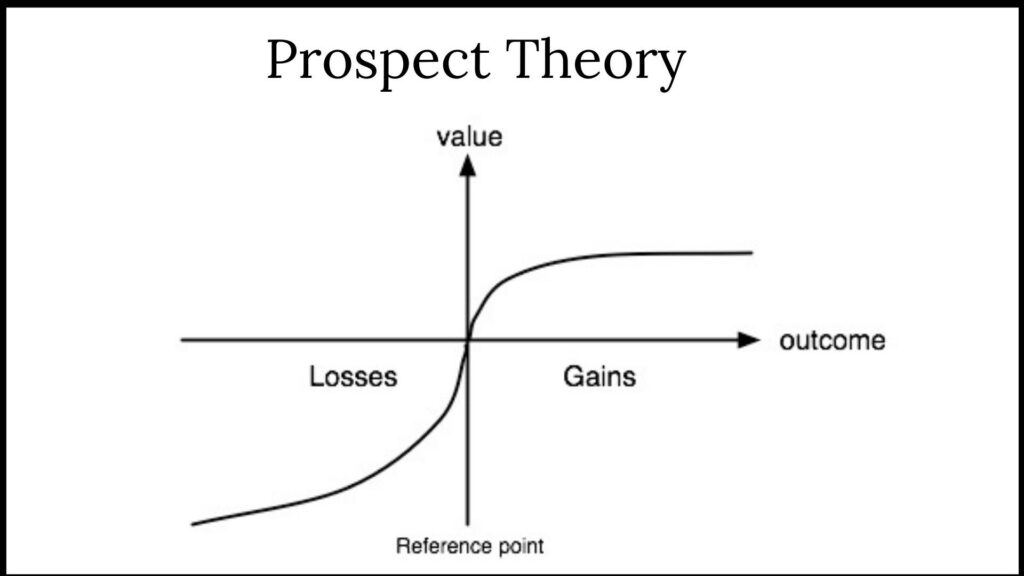
    Behavioral economics reveals a lot about the science of decision making, under conditions of scarcity. Prospect theory and loss aversion describe how humans, behave when faced with risky choices and differing levels of utility (gain). Prospect theory describes how individuals make a choice between probable, risky choices. Loss aversion is a phenomenon that is a part of prospect theory (developed by Kahneman and Tversky) that describes how people make decisions based on potential gain or losses relative to their specific situation. Loss aversion is the tendency to prefer avoiding losses to acquiring equivalent gains. When faced with risky choices leading to gains, people are risk-averse and prefer more certain choices with lower expected utility. But when faced with risky choices leading to losses, individuals are risk-seeking, preferring solutions that lead to a lower expected utility in order to avoid losses. 

    Tversky and Kahneman proposed that losses cause a greater emotional impact on an individual than does an equivalent amount of gain, so they will choose the option that is most certain. For example, when faced with two options — Option 1 – $3,000 with a probability of 39%, $2,800 with a probability of 60%, and $0 with a probability of 1%, or Option 2 – a guaranteed $2,000 — humans will choose Option 2. Prospect theory and loss aversion mean that people don’t base choices based on utility overall, but probability. Individuals tend to be loss-averse as they weigh losses about twice as heavy as gains per many studies.

    Prospect theory is applied anywhere from marketing to finance to national security. In finance, investors place more weight on perceived gains versus perceived losses. In international relations, theorists use it to analyze how politicians are likely to take bigger risks to avoid losses. This ties back to a “rational choice model” used in international relations, where the rational choice stems from utilitarianism — the strategic pursuit of the choice with the highest expected utility weighted by probability. The solution to this model being increased amounts and quality of information. More facts, not heuristics or biases, lead to better choices. This is why we shouldn’t act on fear, but facts.

    People hate utility losses twice as much as they enjoy gains. They are more willing to take risks to avoid losses. Much like in game shows, participants in behavioral economic studies end their participation in money games when the risk of their loss is close to their effort, even when they face bigger gains by continuing.   Loss aversion as a cognitive bias, is leveraged by marketing campaigns to influence consumer decisions such as through the use of free trials where buyers won’t want to give up the product or service. This is the basis of insurance — where individuals’ need for security and need to avoid big losses causes them to buy in.

    A person’s risk aversion level is dependent on experiences, heuristic judgments, and biases, not often on rationality. A mixture of neurology, socioeconomic factors, and culture influence how we make decisions — with powerful and wealthier people being less loss averse. Due to their safety net and network, they assign less weight to losses than other people. The key part of prospect theory that leads humans to miss out on gains they might win due to fear, is the idea that people attribute excessive weight to events with low probabilities and insufficient weight to events with high probability. Without having enough information, acting on personal experiences and biases, individuals might choose choices they wrongly see as more probable that have a lower expected utility. This is fear and heuristics in action.

    Loss aversion is the tendency to prefer avoiding losses to acquiring equivalent gains. But an overwhelming fear of financial losses can cause bad decisions — such as when investors hold stock for too long or too little amount of time. The fear of potential losses paralyzes us from trying as we overestimate risks — in the end this prevents us from taking even well-calculated risks, with great potential for returns. 

    What we can take away from prospect theory studies, is that humans vastly miscalculate the probability of the outcomes of certain choices and tend to focus more on the negatives — failure, financial losses, etc., instead of what can be gained in a well-calculated, strategic move. Often times, we fear making a choice towards our goals and dreams even if you have nothing to lose. Trying and not succeeding isn’t failure. Failure is never trying at all, or giving up instead of learning from it and strategizing.

  • What’s Driving Inflation

    What’s Driving Inflation

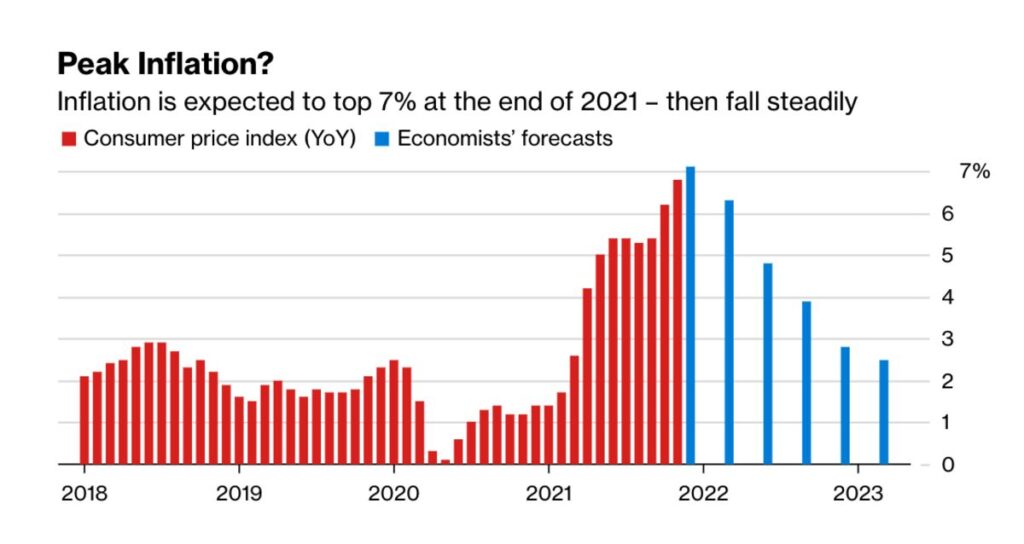
    Soaring inflation rapidly climbed 7% in the United States through December, the fastest since 1982. The rising price index isn’t a unique phenomenon, it’s been seen globally. However, it’s been more pronounced in the U.S. than in any other country. Policy makers argue over the causes among partisan lines, but what has really been the driving force behind this massive inflation eating away at consumers stagnant salaries during a pandemic? Is it the general economic rebound, government spending bills, or supply shortages driving up the price level?

    Inflation is a general increase in the price level and decrease in the purchasing power of money. It’s measured through the Consumer Price Index, as a change in prices for basic goods and services like food, clothing, and transportation. It can be caused by both demand-side factors like rising consumer demand and supply-side factors like supply chain shortages that we are seeing. 

    Economists believe 40-year high inflation has been caused by a combination of the economic rebound, government spending, and supply shortages while the Federal Reserve has kept interest rates at rock bottom. Government spending in the form of stimulus bills to help the millions of Americans who lost their jobs and faced imminent economic crisis, stimulated the economy. While many nations passed stimulus bills to boost demand, the United States’ $5 trillion in spending in 2020 and 2021 far outpaces any other country’s economic response. It boosted economic growth through consumer spending. This demand-side boost pushed the demand curve right and raised prices.

    The White House holds that supply chain disruptions and shortages are responsible for the rapid increase in inflation. ““The inflation has everything to do with the supply chain,” President Biden said in a news conference. “While there are differences country by country, this is a global phenomenon and driven by these global issues,” Jen Psaki, the White House press secretary, said. It is true that supply shortages have caused inflation to be seen worldwide, in countries sfrom India to Brazil, and Europe (5 percent.) Prices also rose at a record-breaking rate in the U.K. and Canada.

    The global supply chain did indeed collapse as the pandemic spread, factories shuttered, ports were backlogged, and trucking labor shortages rose. Yet amid these global supply shortages, the U.S. has experienced more rapid inflation than almost any other developed economy. 

    This all happening while the current Fed Funds Rate stands at 0.25%. To push both demand and supply curves to an equilibrium price level, the Federal Reserve could work to retract demand, while the government attempts to fix supply chain issues. The Fed is preparing to raise interest rates in March to make borrowing more expensive and slow spending down to ameliorate inflation. This should be effective, as many households have increased their housing and auto debt, during such low rates, thereby driving up inflation.

    These actions can help rein in inflation as the U.S. economic output (real GDP) is expected to climb 4% in 2022.  The inflationary buble isn’t expected to be permanent, but to remain near 7% for a few months then at more moderate levels through the rest of 2022.

  • The Great Labor Awakening

    The Great Labor Awakening

    A great reckoning has come for the American business model of labor exploitation — will corporations choose growing labor shortages and boycotts, or employee rights and fair pay? Although the top 10 percent in the U.S. own 70 percent of the U.S. wealth, the working class holds tremendous untapped power capable of transforming the corporatist modum operatus. We’re in the midst of a great labor awakening across the country — from the labor strikes, mass resignations, and boycotts. Time is up for corporatism and the trickle-down fairy tale stockholm syndrome America believed in all while wages haven’t kept up with the 57% rise in inflation & 176% rise in productivity over the past 50 years, while 29 million go without health insurance, and while 38 million go hungry in the wealthiest country on earth.

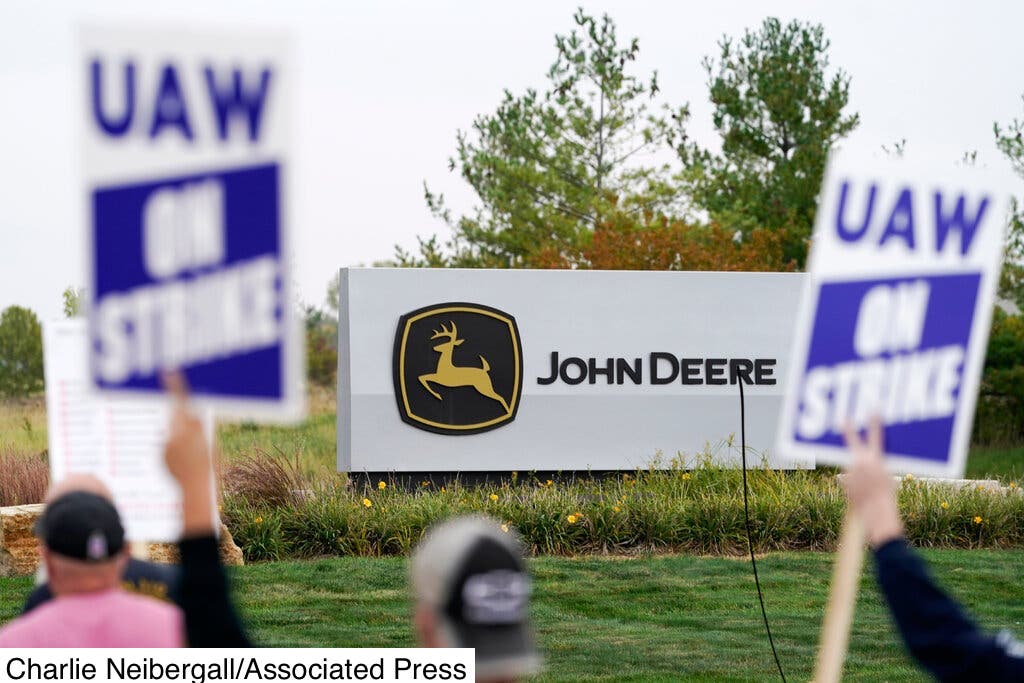
    From John Deere to nurses to Kellogg plant workers — waves of strikes across the country are highlighting economic inequality amid a time of anti-union legislation and a widening wealth gap. Labor “shortages” are leveraging the working class’ voice in the conversation on harsh working conditions and stagnant pay. Over 100,000 unionized employees — from Hollywood production crew members, to John Deere factory workers and Kaiser Permanente nurses — overwhelmingly voted to authorize strikes. 

    This all comes during a time of worsening income inequality. Through 2020, Americans experienced mass hunger, unemployment, sickness, and an eviction crisis at a level not seen since the Great Depression through no fault of their own and with little relief. The other America —the billionaire class’ — has seen their wealth surpass a $1.9 trillion gain since mid-March, 2020 when most federal and state economic restrictions responding to the virus were in place. While over 70 million Americans filed for unemployment (40% of the labor force), evictions rose, and food banks ran out of food, 660 billionaires saw their wealth rise 40% to $4.1 trillion 10 months into the pandemic and Wall Street minted 56 new billionaires. This amount is two-thirds higher than the $2.4 trillion in total wealth held by the bottom half of the population of 165 million. The pandemic has exacerbated the nation’s economic inequality.

    Wealth is quite literally being heinously stolen from workers. While 45 out of 50 of the biggest U.S. companies turned a profit since March, the majority of firms cut staff and gave most of the profits to shareholders. John Deere’s CEO for one, has seen his salary rise 160% during the pandemic, while the workers producing the wealth struggle for fair pay. The company made $2.75 billion in profit in 2020, paid out $1.3 billion in dividend payments and they bought back $750 million in stock on top of the obscene CEO pay increases. 

    Union members are simply demanding fair pay. John Deere offered an initial raise of 5-6% with a total increase in wages of 11% over 6 years, but inflation over the last year alone was 5%. (It is normally 2.5-3%.) After those 6 years they’d be earning less than they are now while the company keeps pumping up executive’s salaries and distributing worker-produced profits to shareholders.

    Workers — unwilling to work starvation wage jobs subsidized by taxpayers through social programs — are en mass exodus. The U..S. had 10.4 million unfilled job openings in August, down from a record high of 11 million in July. Our front-line workers, so essential to our economy as the rest of America discovered, can’t afford their own survival. 

    The collective bargaining power of unions and progressives is what brought us the weekend, the 8-hour work-day, anti-trust laws — it outlawed child labor. Sadly, waning union power in recent decades has prevented further change towards justice and fairness.  In 2020, there were just 11 major work strikes, while from 1950 to 1980, the U.S. saw an average of about 300 per year per the Bureau of Labor Statistics. As of 2020, only 11.% of the workforce was unionized, compared to 20% in 1983. 

    Despite the anti-union and labor rights efforts of the previous administration, which gave $2 trillion to wealthy Americans, Americans’ union approval is at a 60-year high. Over two-thirds of those surveyed and 77% of Americans 18-34 were in favor per a September Gallup poll. Democrats have been negotiating for an infrastructure package that would provide thousands of jobs to union workers. The conditions of the jobs, however, need an overhaul.

    America must improve its plummeting living standards by doing more than clapping for our front-line workers who uphold our economy and line shareholders and executives pockets with their sweat and toil. As AFL-CIO President Liz Shuler said, “This is the capitalist system that has driven us to the brink,” she added. “Inequality is just getting worse and worse. … We think unions are the solution.”

  • Is Biden Responsible for the 7-Year High Gas Prices?

    Is Biden Responsible for the 7-Year High Gas Prices?

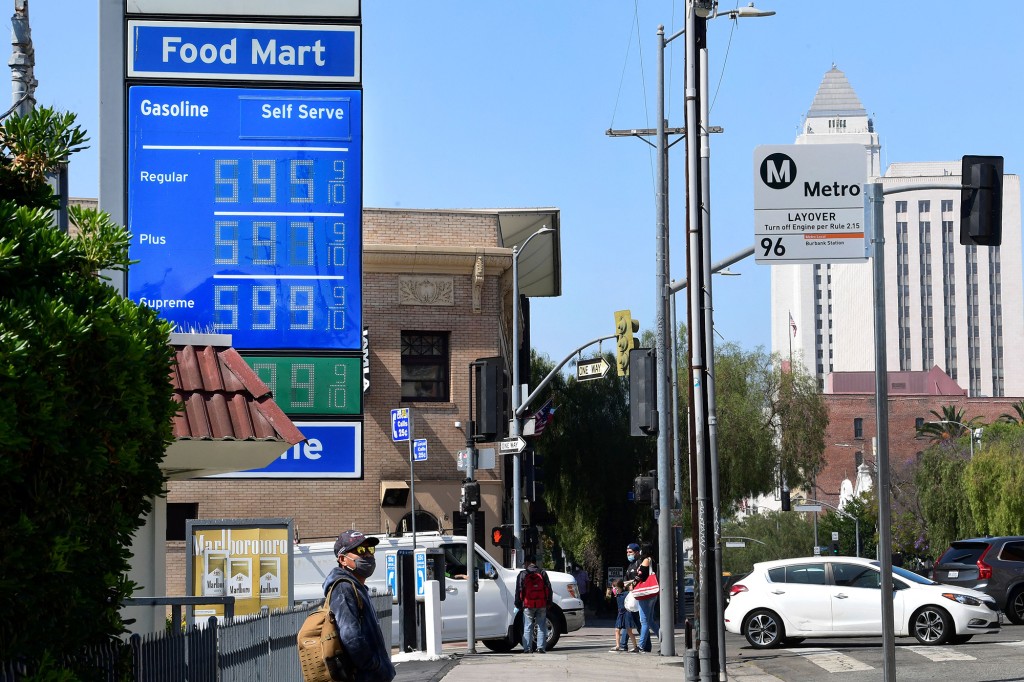
    Since the U.S. economic reopening began, gas prices rapidly hit a 7-year national average high of $3.24 a gallon. Consumers are feeling pain at the pump and wondering if this is the fruit of President Joe Biden’s energy policies. This oil and gas sticker shock threatens to strengthen the country’s biggest inflation scare in over 12 years, but are these simply supply and demand market forces at play and what tools does the U.S. president have to alleviate this? Do solutions that have been outlined clash with U.S. climate diplomacy initiatives?

    Crude Oil Prices and Market Forces

    Voters historically blame high gas prices on whoever is the current president, but short-term retail gas prices are not affected by long-term presidential energy policies, rather by crude oil prices that move by the very forces of supply and demand. As with other commodities, when supply exceeds demand, prices fall, and the inverse is true. 

    These two forces are affected by production costs, and supply and demand shocks like — natural disaster, geopolitical instability like war, and any unexpected event that constrains output or disrupts the supply chain. A positive supply shock increases output which makes prices fall, and the inverse is true as well.

    In addition to supply and demand shocks, decisions about supply output are made by producers like the Organization of Petroleum Exporting Countries (OPEC), independent petro-states like Russia, and private oil-producing firms like ExxonMobil. OPEC controls almost 80% of the world’s supply of oil reserves. This consortium sets production levels to meet global demand which in turn influences the price of oil and gas. 

    The U.S. president does not control OPEC and can not set prices. Supply shortages and rising post-economic reopening gas demand caused the rise in gas prices.

    Effects of Biden’s Energy Policies 

    The average retail gas price is now $1.02/gallon higher than a year ago, and higher than any time since 2014. Over a third of U.S. energy consumption in 2020 was supplied by natural gas. Oil and gas prices began to rise in May 2020 — tripling between then and the last week of December 2020. This is just the natural increase in demand for gas as the economy began opening back up from the pandemic shutdowns.  

    The entire world experienced this bounceback in oil and gas prices, and even other natural resources like lumber, metals, cotton, and sugar skyrocketed. Gas prices rose 280% in Europe this year and led to a 100%-plus surge in the U.S. due to factors like low storage levels, carbon prices, and reduced Russian supplies.

     Presidents historically can only take very few actions — release oil from the Strategic Petroleum Reserve, increase gas taxes, or engage in Middle East conflict. Biden has done none of this, yet people point to his long-term energy policies that do not affect current supply, as proof of his culpability in the crisis. 

    Detractors often point to Biden’s cancelation of the treaty-violating Keystone XL pipeline, and suspension of new oil and gas permits for federal land and water. However, these actions drive up gasoline prices in years time, not mere months. These measures could only restrict oil supplies years in the future. Companies even have years of permits stockpiled in preparation for moves like this. 

    The oil market only directly reacts to moves by OPEC that quickly impact present supply and gas prices are directly correlated to the price per barrel of WTI crude oil.

    What Biden Can Do

    What can Biden really do to bring gas prices down? The U.S. planned to get OPEC and its allies to unleash spigots which hasn’t succeeded yet. OPEC+ announced it would only gradually add supply to the market instead of following the White House’s calls to ramp up production. This sent crude prices above $79 a barrel for the first time since November 2014.

    Tapping the Emergency Oil Stockpile

    Energy Secretary Granholm said Biden is considering releasing barrels from the Strategic Petroleum Reserve (the nation’s emergency stockpile of crude). Oil prices tumbled below $75 a barrel following these comments about the SPR which the administration used last month after Hurricane Ida. After clarifying there was no immediate plan for this, crude rose back near $79. However, tapping into the SPR could be too inconsequential of a move. Goldman Sachs believes releasing up to 60 million barrels of oil from the SPR would only be of “modest help,” cutting their year-end forecast for $90 Brent crude by just $3.

    Oil Exports

    Granholm expanded, adding that they have not ruled out banning oil exports, but the Energy Department walked back on it saying there’s no plan for that. A ban would likely only make Brent prices rise due to weaker supply. 

    Therefore, the White House must persuade OPEC+ to return production that was diminished during the pandemic

    Pushing OPEC to produce more fossil fuels while huddling with leaders in Glasgow at COP26 summit just signals the start of a tricky energy transition towards sustainability.

    Overall though, higher gas prices raise the risk of stagflation – high inflation, low growth. Goldman Sachs predicts higher oil demand, with a $5 per barrel upside risk to its fourth-quarter 2021 Brent price forecast of $80 a barrel. Brent is trading at about $74 currently .

  • Starvation Wages Caused The Labor Shortage, Not Unemployment Insurance

    Starvation Wages Caused The Labor Shortage, Not Unemployment Insurance

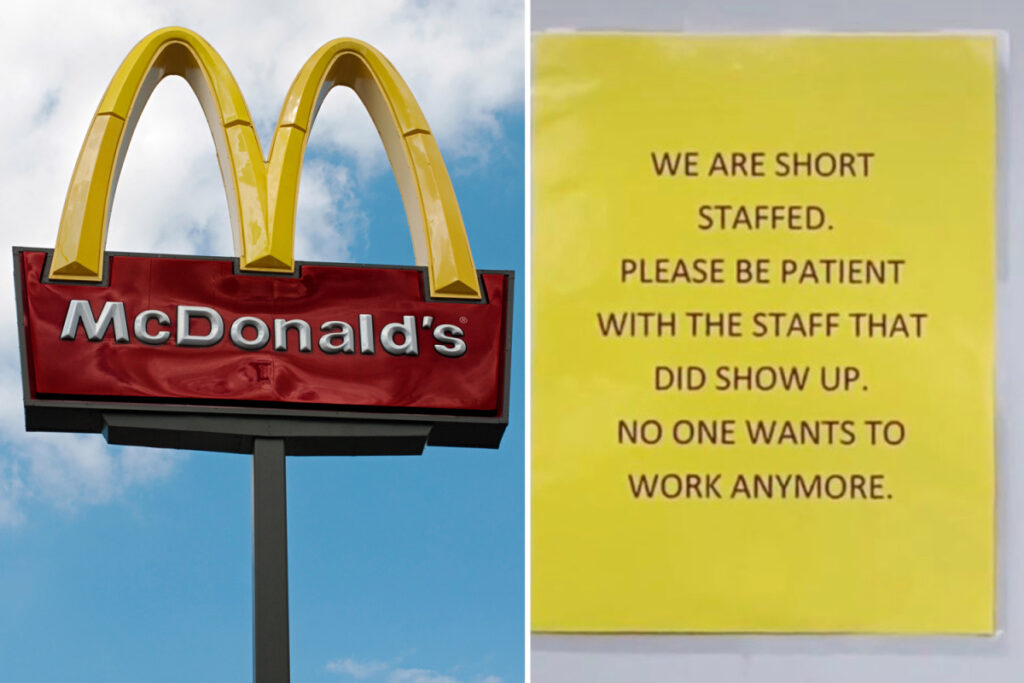
    “No one wants to work anymore,” reads one sign taped to a McDonald’s drive-thru. Many fast-food and service industry companies are reporting that they’re facing a labor shortage created by unemployment insurance. This myth has been refuted by workers and analysts’ data. The real problem is the stagnant, starvation minimum wage which if it kept pace with the over 657% rise in inflation & 176% rise in productivity over the past 50 years, would be $24.  The free market capitalist solution is for employers to raise their wages and offer safe working conditions to attract workers. 

    Labor Effects of Unemployment Insurance

    A letter from the National Owners Association, a group of McDonald’s franchisees, stated, “When people can make more staying at home than going to work, they will stay at home.”

    While April’s job numbers were dire compared to March — 266,000 jobs added versus 916,000 in March — a $300 a week benefit is not the cause of this so-called “labor shortage.” Unemployment benefits to help people survive a pandemic that has killed 587,000 people and unemployed 114 million in 2020, are not generous enough to cause people to resign to unemployment. Workers report wanting a fair wage to work in hazardous conditions. 

    Furthermore, various studies found that even the $600 unemployment insurance from 2020 had little to no labor supply effects (employment or job search.) One study found that, “employers did not experience greater difficulty finding applicants for their vacancies after the CARES Act, despite the large increase in unemployment benefits.”

    Studies show that unemployed workers who receive benefits search for jobs moreget better offers, and get roles more suitable for their educational background.

    Laying blame on the labor force, who has experienced eviction, mass hunger and unemployment levels not seen since the Great Depression, while billionaire class’ wealth surpassed a $1.9 trillion gain, is both callous and unwarranted.

    Unemployment benefits are not depressing work, starvation wages are.

    A Starvation Wage

    If the minimum wage kept pace with the over 657% rise in inflation and 176% rise in productivity over the past 50 years, it would be $24. It peaked in 1968 at $11.18 when a manufacturing job bought you a house for $26,600. The $15 minimum wage was needed years ago.

    Workers making $7.25 an hour earn 18% less than those in 2009 did. Raising the minimum wage modestly to $15 per hour would give more than 32 million Americans a raise.

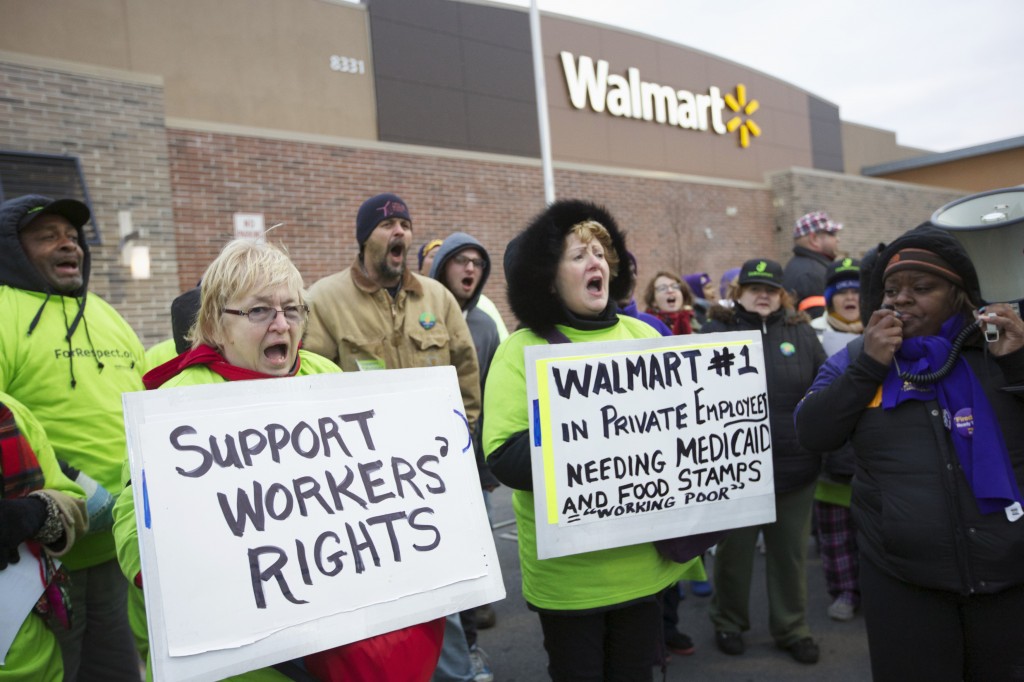
    Moreover, exploitative corporations use taxpayer money to subsidize starvation wages that leave employees relying on public assistance programs to barely survive, while executives reap billions in profit. Approximately 70% of adult wage earners receiving Medicaid and SNAP benefits worked full-time hours on a weekly basis. It’s morally despicable that someone working full-time can’t afford to exist. There is no excuse for multi-million and billion-dollar corporations (like Walmart who gained $64 billion during the pandemic) not paying their workers enough to eat and survive. Corporations’ labor costs are so low they’re being subsidized by taxpayers.

    If businesses refuse to pay their workers $15 an hour to survive, they shouldn’t exist. The free market capitalist solution is for them to meet the market need and provide livable compensation in exchange for producing all the labor keeping their businesses running. 

    The problem in the United States is not unemployed workers in a pandemic receiving $300 extra to survive, it’s that employers are robbing those producing wealth of their dignity and ability to support themselves. We should all be fighting to raise wages for the most vulnerable among us. As 1 Timothy says, “a worker is worth their wages,” or as Leviticus 19:13 says, “You shall not defraud your neighbor; you shall not steal; and you shall not keep for yourself the wages of a laborer until morning.” Or as Deuteronomy 24:14 says,  “You shall not withhold the wages of poor and needy laborers, whether other Israelites or aliens who reside in your land in one of your towns.”

  • How Taxpayers Subsidize Corporations’ Starvation Wages

    How Taxpayers Subsidize Corporations’ Starvation Wages

    A recent study proved that large corporations use taxpayer money to subsidize starvation wages which leave employees relying on public assistance programs to just survive, while executives reap billions in profit. The Government Accountability Office undertook the study at the request of Sen. Bernie Sanders to answer questions about the relationship between employers and the federal benefits programs. They found that 5.7 million Medicaid enrollees and 4.7 million SNAP recipients who worked full-time earned wages so low that they qualified for these programs.The time for a reckoning on corporations’ labor exploitation has come and we must ask ourselves why a minimum wage that hasn’t kept up with the 657% increase in inflation and 176% increase in productivity is acceptable. If a company can’t pay the labor force creating their wealth well enough to feed themselves, their nefarious business plan is inherently flawed. 

    Exploitation should not be subsidized.  Yet, according to the study titled “Millions of Full-time Workers Rely on Federal Health Care and Food Assistance Programs,”  this is exactly what American tax dollars are funding. Among the largest culprits, were Walmart McDonalds who have the most workers on food stamps and Medicaid. Walmart was in the top four employers of SNAP and Medicaid beneficiaries in each state, while McDonald’s was in the top five in the nine states reported. Within the nine states that responded about SNAP benefits, Wlmart employed 14,500 workers receiving the benefit and McDonalds 8,780. Out of the six states that responded about Medicaid enrollees, Walmart came out first place, with 10,350 employees. McDonald’s followed it with 4,600 Medicaid enrollees in those states.

    This November 2020 study came just as 660 billionaires gained $1.9 trillion while hunger rose 28%, 73 million lost work, 12 million lost health insurance, & over 25 million fell ill with Covid-19.

    Moreover, today’s $7.25 minimum wage is 29% lower than it was 50 years ago despite the fact that productivity has doubled since the late 1960s. The minimum wage would be $24.00 today if it kept up with the over 657% rise in inflation & 176% rise in productivity over the past 50 years. Hard-working Americans driving the economy through their labor are being robbed.

    Approximately 70% of adult wage earners receiving Medicaid and SNAP benefits worked full-time hours on a weekly basis. It’s morally despicable that someone working full-time can’t afford to exist. There is no excuse for multi-million and billion-dollar corporations (like Walmart who gained $64 billion during the pandemic) not paying their workers enough to eat and survive. Corporations’ labor costs are so low they’re being subsidized by taxpayers. Huge corporations are making billions in profit by relying on corporate welfare from the government by paying their workers poverty wages. It’s time for large corporations to finally pay their workers a living wage. Corporate welfare must end. 

  • Soaring Wealth Inequality and Pandemic Profiteers: A Call for Tax Reform

    Soaring Wealth Inequality and Pandemic Profiteers: A Call for Tax Reform

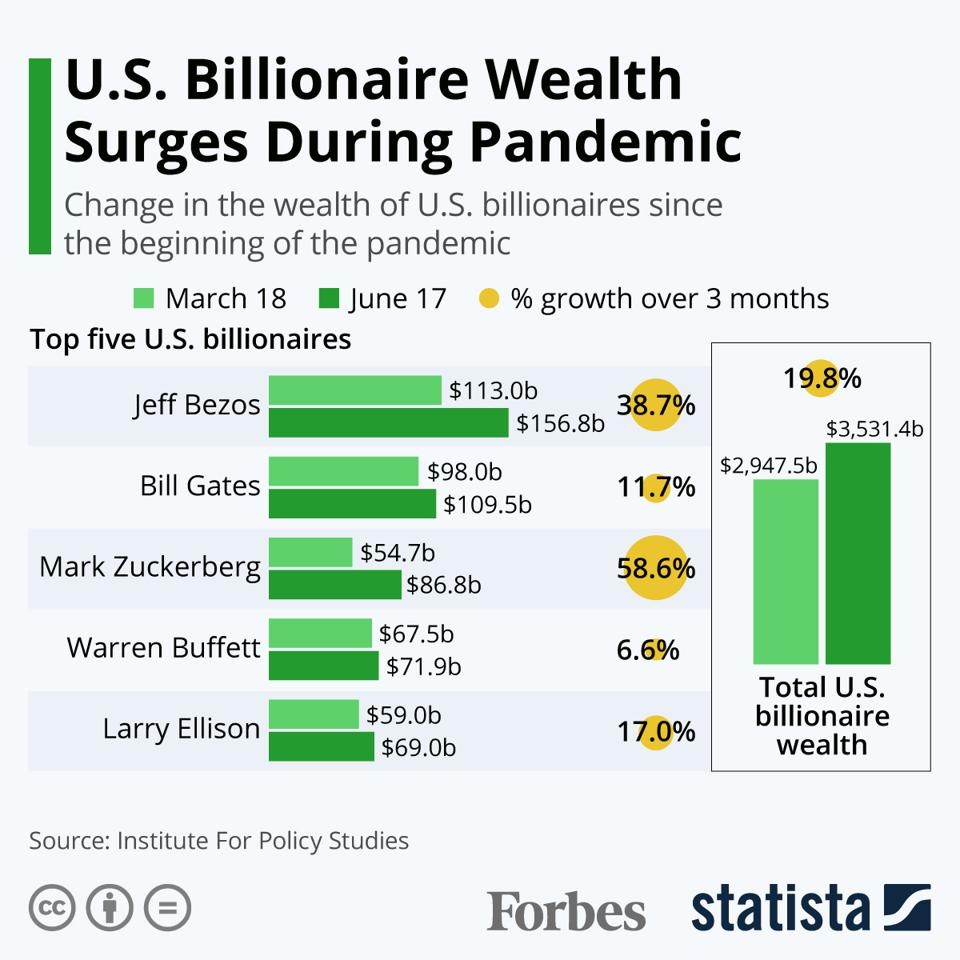
    Mass hunger, unemployment, sickness, and an eviction crisis are things Americans are experiencing at a level not seen since the Great Depression through no fault of their own and with no relief. The other America, the billionaire class’ wealth has seen their wealth surpass a $1.9 trillion gain since mid-March, 2020 when most federal and state economic restrictions responding to the virus were in place. While over 70 million Americans filed for unemployment (40% of the labor force), evictions rose, and food banks ran out of food, 660 billionaires saw their wealth rise 40% to $4.1 trillion 10 months into the pandemic and Wall Street minted 56 new billionaires. This amount is two-thirds higher than the $2.4 trillion in total wealth held by the bottom half of the population of 165 million. The pandemic has exacerbated the nation’s economic inequality.

    Recession by The Numbers: U.S. Job Losses

    Regular Americans have not fared as well as billionaires during the pandemic: The pandemic hit the airlines ($34B in losses), restaurants ($240B in losses), hotels, and mall-based retailers the hardest while industries like tech boomed. The unemployment rate stood at 6.7% beginning January. Over 25 million have fallen ill with the virus and more than 420,000 have died from it. [Johns Hopkins Coronavirus Resource Center]. Over 73 million lost work between Mar. 21 and Dec. 26, 2020. [S. Department of Labor]. 16 million were collecting unemployment on Jan. 2, 2021. [S. Department of Labor]. Nearly 100,000 businesses have permanently closed. [Yelp/CNBC]. 12 million workers have likely lost employer-sponsored health insurance during the pandemic as of August 26, 2020. [Economic Policy Institute]. 14 million adults—1 in 5 renters—reported in December being behind in their rent. [CBPP]. 

    Employment for t those making less than $27,000 a year remains over 20% below January 2020 levels. Last month, 29 million adults lacked sufficient foodt, according to the U.S. Census Bureau’s Household Pulse Survey, up 28% since before the pandemic. From Nov. 25-Dec. 7, between 8 -12 million children lacked food [Center on Budget & Policy Priorities (CBPP)]. Over a third of U.S. adults who have fallen behind on rent or mortgage payments are likely to face eviction or foreclosure over the next two months, per the December Census Bureau survey.

    This economic inequality also exists among racial, ethnic, and gender gaps. Low-wage workerspeople of color and women have suffered disproportionately in the combined medical and economic crises of 2020. Latinos are more likely to become infected with Covid-19 and Blacks to die from the disease than are white people. While the Labor Department showed that all of the job losses in December were positions previously held by women

    Billionaire Wealth and Pandemic Profiteers

    Polar opposite to this, the one-percent’s wealth soared to the tune of $1.9 trillion and the US gained 56 new billionaires between mid-March and Dec. 22 per a December report from the Institute for Policy Studies. America’s 659 billionaires now hold roughly $4 trillion in wealth — roughly double what the 165 million poorest Americans are collectively worth. The 10 richest billionaires have a combined net worth of more than $1 trillion.

     Some of the biggest winners during this pandemic have been companies like Amazon, who’s profit increased by about 70% to $14.1 billion while they exploit their workers. Jeff Bozeos, Elon Musk,and Bill Gates were each worth more than $100 billion on Jan. 18.  Elon Musk’s wealth grew by over $154 billion, from $24.6 billion on March 18 to $179.2 billion on Jan. 18. Jeff Bezos’s wealth grew from $113 billion on March 18 to $182 billion, an increase of 61%. Mark Zuckerberg’s wealth grew from $54.7 billion on March 18 to $92 billion, an increase of over two-thirds

    It’s difficult to fathom such massive wealth gains concentrated at the top while workers are suffering during a pandemic-induced world economic collapse marked by an increased surge in evictions, over 465,000 COVID deaths, 6.7% unemployment, and a 28% increase in hunger. But the top 20% of earners have not had to worry about these issues as they carry out their jobs from home, gain from the Fed’s 0% rates, refinancing mortgages at record low rates, and watch the value of their stocks, bonds, and investment accounts surge. Those whose wealth is captured by financial assets have benefited during an economic collapse.

    Tax Reform

    This $1.9 trillion wealth gain by 660 U.S. billionaires is large enough to pay for all the relief for working families in President Biden’s proposed $1.9 trillion pandemic rescue package which includes $1,400 in direct payments to individuals, $400-a-week supplements to unemployment benefits, and an expanded child tax credit. A stimulus check of more than $3,400 for every one of the roughly 331 million people in the United States.

    There is no reason why workers should be struggling while billionaire CEOs amass trillions of dollars in wealth built by workers. This is why tax reform is necessary. Biden’s promising tax plan wants to deliver on this by transforming parts of billionaire gains into public revenue to help the nation. But this still falls short of structural change to how wealth is taxed. 

    Moody’s Analytics, “The Biden Fiscal Rescue Package,” Jan. 15, 2021

    Forbes, “Forbes Publishes 34th Annual List Of Global Billionaires,” March 18, 2020.

    The best approach is an annual wealth tax on the top 0.1% of  households like the tax plan proposed by Senator Bernie Sanders among others. Taxing those worth over $32 million only will “raise an estimated $4.35 trillion over the next decade and cut the wealth of billionaires in half over 15 years, which would substantially break up the concentration of wealth and power of this small privileged class.”

    Another solution is the taxation of annual investment gains on tradable assets as advocated by Senate Finance Committee chair,  Ron Wyden

    Economic Inequality Is Institutional Robbery

    Over the last 30 years, the top 1 percent has seen a $21 trillion increase in its wealth, while the bottom half of American society has actually lost $900 billion in wealth.

    Moreover, today’s $7.25 minimum wage is 29% lower than it was 50 years ago despite the fact that productivity has doubled since the late 1960s. The minimum wage would be $24.00 today if it kept up with the over 657% rise in inflation & 176% rise in productivity over the past 50 years. Hard-working Americans driving the economy through their labor are being robbed.

  • Tax Law: How the Wealthy Get Away With Evasion

    Tax Law: How the Wealthy Get Away With Evasion

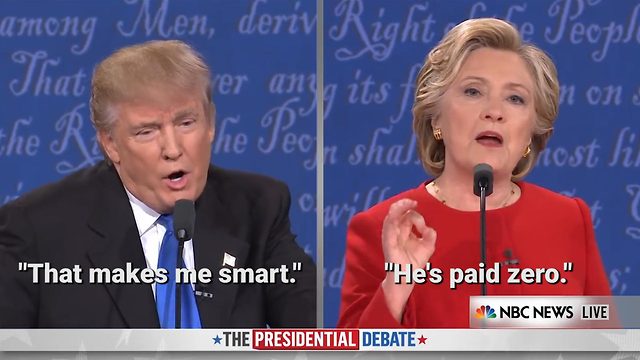
    While billionaires brag about tax evasion, the highest tax burden as a percentage of income falls on the poorest Americans. The lowest 20 percent of taxpayers pay a tax rate more than 50 percent higher than the top 1 percent of households. This should come as no surprise after the Panama Papers bombshell of 2016 that revealed rampant tax evasion from the oligarchy. Most recently, President Trump’s tax returns revealed that he paid $0 in federal income taxes in 10 out of the 15 past years and just $750 in 2016 and 2017 per a New York Times report. This unfairness — part in due to huge losses and tax breaks for real estate developers — point to a larger problem of income inequality in America. The problem is a lot of it is legal. Tax law in this country bears the burden on the working-middle-class families while billionaires like Amazon evade taxes while exploiting those very working-class employees who create their wealth. 

    Trump has paid about $400 million less than the average highest-earning 0.001% of tax filers in the US does. This is in part due to tax breaks, inflated write-offs for $70,000 in hair care, consultation fees, and falsely classifying personal estates as “investment properties” to reduce his taxable profit. and huge losses.Trump’s tax returns revealed“struggling properties, vast write-offs, and hundreds of millions in debt coming due.” The IRS will determine whether he broke the law after his audit. But he did illegally take $70,00 in tax deductions for hair care according to The New York Times’ expose. 

    The racist, tax-evading, con-man in chief has called himself smart for not paying taxes yet rails about illegal immigrants who pay $27.2 billion in federal, state, and local taxes each year. Corrupt plutocrats are openly bragging about cheating the system.

    How Did Trump Avoid Taxes?

    It’s all due to a combination of tax breaks and huge losses. Real estate moguls get tax breaks such as deducted interest on loans to reduce their taxes. Unlike people who take out credit cards and pay high interest rates who don’t deduct their interest. They gain another tax break on depreciation even if the building is appreciating. (Something about him being a conman and hypocrisy against immigrants)

    Since 2000, Trump has reported hundreds of millions of dollars in losses on golf courses alone. Tax records show that his Trump International Hotel in D.C. lost $55.5 million along with big casino losses in Atlantic city.

    The wealthy use losses to cancel out other income and harness the power to accountants and lawyers while making money flow to tax-exempt organizations or offshore.

    However, Trump is an exceptionally bad businessman who paid no taxes for 10 years because he had massive losses year after year due to dumb investments. This revelation should come as no surprise as the conman stiffed vulnerable Americans through fraudulent “Trump University,” regularly stiffed contractors, and even stole kids’ cancer charity funds

    Moreover, personal expenses written off as cost of business vastly reduced his tax liability. Only the IRS audit will determine if those write-offs (such as a $70,000 for his hair care, $100,000 for his daughter Ivanka’s) were illegal. 

    To further reduce his reported profit, the NYT expose revealed that he classifies his personal estates as “investment properties” and reports inflated “consultation fees” for nearly all of his projects. For just one property, he  “has been able to write off $2.2 million in property taxes since 2014.” 

    His $72.9 million tax refund is also the subject of a battle with the IRS.

    Tax Evasion

    The Panama papers, a massive document leak published by  International Consortium of Investigative Journalists in 2016, revealed how the world-wide oligarchy commits tax evasion through offshore tax havens. However, the largest proportion of  tax-avoidance is committed legally on US soil through a system of infinitely deferred capital gains taxes, false write-offs, weakened estate tax, and shrinking top tax rate that allows billionaires to literally never pay taxes.

    In 2018, Amazon paid $0 in U.S. federal income tax on over $11 billion in profits before taxes. It also received a $129 million tax rebate from the federal government. This is all while the lowest 20 percent of taxpayers pay a tax rate more than 50 percent higher than the top 1 percent of households. 

    The Wealthy’s Tax Code

    But how is this tax-avoidance possible? It’s simple. Income from wealth is taxed more lightly than labor income (which accounts for 80% of total income). This is all while the top one-percent’s capital income enjoys preferential tax rates. Tax code also allows the wealthy to exclude much of their income from tax returns – because it’s investment income. 

    The reason billionaires like Jeff Bezos can pay $0 in Texas is because they defer capital gains income each year, delaying by decades their taxes until the tax bracket is favorable or will have larger capital losses to offset the gains. Amazon founder Bezos receives an annual salary of $81,840 that is subject to income tax. However, his wealth is in the form of Amazon stock holdings which grew over $100 billion in the last decade. This $100 billion is only taxed when or if he sells some of his stock. Therefore, the income tax is mostly voluntary for billionaires by way of infinite deferment of capital gain taxes. His tax bill was $1.5 billion on a decade of stocks because he only sold $6.3 billion in shares — the tax code ignores the $100 billion gain. Many wealthy individuals choose to never sell their valuable stock and avoid taxes their entire lives. When they need cash they can pledge stock as collateral for credit as Larry Ellison did for a $10 billion credit line. They can obtain cash without selling their shares and paying taxes while the stock appreciates.

    Another way the wealthy avoid taxes is through industry-specific capital gains tax breaks like real-estate in which sellers can avoid paying tax on realized capital gain when exchanging for a different building. They can keep avoiding taxes by continuously exchanging properties.

    The biggest source of wealth concentration is large inheritances (40% of all wealth) that are subject to a weakened estate tax. The 2017 tax law doubled the amount of inheritance that can be passed on tax-free to $22 million. Less than 1/1,000 estates will owe any estate tax. While the estates big enough to face the tax utilize loopholes to reduce or eliminate their tax burden by artificially devaluing their assets.

    Moreover, even the wealthy’s source of taxable income also enjoys a more favorable income tax burden than the 99% with today’s historical low top tax rate and lower rate for capital gains than for wages and salaries.The top tax rate is 37% — much below the post-WWII average of 59%, and high rate of 70% early in the postwar decades. These decades experienced strong growth and standards of living. Furthermore, there is no progressive tax rate above the top $480,000 income threshold. The tax code makes no distinction between someone earning $500,000, $10 million, or $100 million.

    Corporate tax loopholes are a whole different article. They’re the Amazon paid $0 in federal taxes on over $11 billion in posted income in 2018. That same year they even received a federal refund of $129 million. The U.S. corporate tax rate was cut from 35% to 21% thanks to the Tax Cuts and Jobs Act

    Widening Inequality

    While billionaires brag about tax evasion, the highest tax burden as a percentage of income falls on the poorest Americans. The lowest 20 percent of taxpayers pay a tax rate more than 50 percent higher than the top 1 percent of households. 

    Income inequality is at an all time high since the Census Bureau began tracking it.  Despite being the wealthiest country on earth, and worker productivity doubling, 12.3% of families continue living in poverty, and 40 million go hungry. 

    The richest 10% of U.S. households represented 70% of all U.S. wealth in 2018, and the top 1% hold 42.5% of national wealth, a far greater share than in other OECD countries. In no other industrialized nation does the wealthiest 1% own more than 28% of their country’s wealth.  Economic inequality in the U.S. ranks higher than in any other wealthy, democratic country, and it has the most poor individuals than any other similar developed nations. Inequality has drastically increased since the 1960s were the top 10 percent of families owned around one-third of the national income, and the top 1 percent received less than 10% of all income (Manza, 2018, p.652). The Gini Index shows that the level of inequality in the United States is almost twice as much as in Sweden and a third more than most other European countries according to The Sociology Project 2.5 (Manza, 2018, p.654). 

    Economic inequality has increased since the 1960s due to technology, decline of manufacturing, globalization, stagnating wages and government policies that have not grown the wealth of the middle-class. People without access to the “college wage premium” have seen their earnings decline in this technology age with less manufacturing jobs.  Deindustrialization has decreased these well-paying jobs for many Americans and only low-wage jobs have been growing for those who are non-college educated (Manza, 2018, p.657). 

    Tax evasion has only exacerbated this income inequality as the rich continue to reap a higher share of profits produced by the workers and not pay their fair share of taxes through weakened estate taxes, deferred capital gains, and artificial write-offs.

  • Untitled post 242

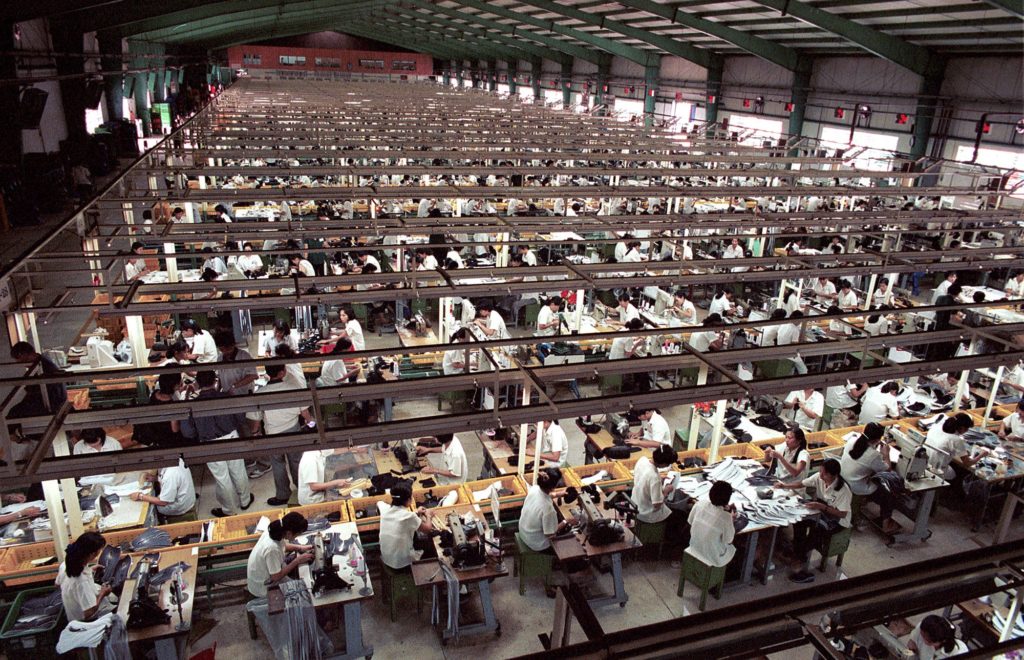
    Industrial capitalism has relied on cost minimization through cheap labor since the Gilded Age — it’s now moved overseas where it’s had unsafe, exploitative ramifications in developing nations. The decline in US manufacturing since the 1970s has without a doubt transformed the economic landscape to the detriment of non-college educated American workers. The 14.3 million outsourced jobs are more than double the 5.9 million unemployed Americans. Globalization of outsourcing practices has had unsafe and exploitative ramifications in developing countries. As sweatshop labor overseas produces our most essentials commodities, can there truly be “no ethical consumption under capitalism?“

    Is there a better economic solution to help both American companies, and developing countries industrialize?

    The flight of manufacturing jobs out of the U.S. has drastically impacted the economy for the worse. People without access to the “college wage premium” have seen their earnings decline in this technology and service industry age with less manufacturing jobs.  Deindustrialization has decreased these well-paying jobs for many Americans and only low-wage jobs have been growing for those who are non-college educated. The stagnated minimum wage has exacerbated this income inequality as the rich continue to reap a higher share of profits produced by the workers.

     In fact, the minimum wage peaked in 1968 at $11.18  when the cost of a four-year public university was $329.00, per the National Center for Education Statistics, a manufacturing job bought you a house for $26,600.00, and the cost of living was 657% lower.

    Source: Economic Policy Institute 2015

    The vertical axis shows  the percent change in productivity and hourly wage relative to 1947. After almost two decades of growth of productivity and wages, wages have stagnated since the 1970s, reflecting the restructuring of American firms. This is all despite the fact that  the average worker was far more productive in 2014 than the same worker would have been in 1970.

    How does this contribute to income inequality? It means that workers, on average, receive a smaller share of their average economic output than four decades ago.

    In the manufacturing age, a working-class family in Detroit in the 1940s had a much brighter set of economic opportunities than a child growing up in today’s Detroit. But beginning in the 1970s, employment in manufacturing began a steep decline due to both technological advances and outsourcing to countries with much lower wages such as China. Another key trend has been the shift towards service sector jobs. With disappearing factory jobs, millions of factory workers that spent their lifetime acquiring knowledge and skills to be a skilled factory worker lost employment and found themselves in a new job market. Places like Detroit, Michigan — once the home of the auto industry — have now become emblems of the impact of the changing economic system.

    Increasing globalization — the growing permeability of national borders and increase in flows of goods and services — has resulted in cheaper imported goods from these countries, the relocation of manufacturing jobs and rise of exploitative and unsafe sweatshops. Globalization has led to outsourcing  — where products are designed, built, and marketed through global supply chains where cheap labor is available. Almost every product in our home is made overseas in sweatshops — from quintessential American companies like Apple to the clothes on our back. In 2015 all 230 million iPhones and 53 million iPads Apple sold were manufactured overseas by Foxconn in factories in Shenzhen, China. Apple workers are exploited through long hours for indentured servitude wages so we can have the latest 0.1 mm bigger screen.

    The U.S. trade deficit with China in 2019 was $345.6 billion (18% less than 2018’s $419.5 billion deficit.) U.S. exports to China were only $106.6 billion while imports from China were $452.2 billion.The biggest categories of U.S. imports from China were computers, cell phones, apparel, and toys and sporting goods

    An explosion in Apple’s overseas Foxconn plants in Chengdu, China killed two workers and hurt a dozen. While in Wintek, hundreds were injured after being forced to use toxic chemicals to clean the iPhone screens we type on. 

    Can the decline in US manufacturing be reversed through tax cuts or trade policy? Since World War II, the share of private employment in goods production (including manufacturing) has steadily declined from just short of 50 percent to just fewer than 20 percent.

    Is ethical consumption possible in our globalized world economy though? Of course, in our current geopolitical environment every ethical condition — environmental,  fair treatment of migrant workers, and more can’t be satisfied by simply moving manufacturing to the U.S. Furthermore, all current work on average varies in degrees of exploitation, workers receive a smaller share of their average economic output than four decades ago.

    The Good Place depicted this dilemma of making perfect ethical choices in an imperfect world– are we contributing to unethical practices if we buy a tomato imported from exploited Mexican farmworkers whose starvation wages are withheld until the end of their three-month contract? How about the produce aisle produced from the labor of exploited migrant workers making $5 an hour who do backbreaking work to feed America? Though efforts like “Fair Trade” labels have been made, making wholly ethical choices is impossible without uprooting the global system of worker exploitation and inequality.

     But what are the effects of ending sweatshop labor overseas? Can these 14.3 million jobs ‘return?’ Not to the detriment of American companies’ profit. Even Donald Trump’s NAFTA renegotiation tariffs on Mexican and Chinese imports and trade war failed to bring back jobs. Imposing laws to artificially restrict outsourcing just makes these companies less ‘competitive’ since they’re actually forced to pay legal wages to American workers. The entire American capitalist model has relied on minimizing costs through exploitative labor since the Gilded Age — it’s now just moved overseas.

    While developing nations benefit from outsourced jobs, the exploited workers do not fairly reap the earnings of their labor. A case study (Akinyemi, 2016) on the impacts of outsourcing to developing economies found that outsourcing has indeed helped reduce unemployment in countries like India and increased their GDP. However, macroeconomic benefits are gilded — they don’t show the scale of exploitation of the 250 million children ages 5 to 14 worldwide forced to work in sweatshops in developing countries and the $0.13 average Bangladesh worker’s wage, $0.26 average Vietnamese worker’s wage, and $2.38 (highest apparel wage) Costa rRican rworker’s wage.It takes an apparel worker in a sweatshop an average of working 70 hours per week to exceed the average income for their country.

    We are not doing these developing economies a ‘favor’ by outsourcing — we are not helping these 250 million children working for cents an hour obtain an education; we are contributing to an exploitative capitalist system that refuses to pay fair wages to workers in the U.S. in the pursuit of maximum profit. A pure ethical consumer choice can’t be made in this global economic landscape of unintended environmental, farm worker, and sweatshop labor exploitation consequences. But we can stop pretending the exploitative labor behind our technology, clothes, and household appliances are a viable and ethical economic model. American jobs can’t be forced home, but the underlying system of exploitative labor where workers reap mere crumbs of their labor must be uprooted – policy by policy.